



We Live and Die as Part of the Wondrous Dharma Part 1
October 2026
Overcoming Death
In one of Founder Nikkyo Niwano’s Dharma talks, in which he discussed people dying and the Buddhist view of human life and death, he said that “The most essential thing in Buddhist practice is ‘liberation from birth, aging, illness, and death.’” Since death is the most significant event in life, one of the essential points of the Buddha Way is certainly “liberation from” (that is, overcoming) anxiety, fear, and suffering related to wondering what happens to us after we die, being scared of dying, and wanting not to die. By overcoming them, you can attain peace of mind and, at the same time, refine your mind and body with prayers for the happiness of yourself and others, which is diligent practice of the Buddha Way.
Regarding my understanding of how we should live and face death—a key element of the Buddha Way—I have previously mentioned such things as when we die, we go home to the one great life force, and that regarding life itself, drawing on the writings of the theoretical physicist Haruo Saji, my view is that our lives are as one with the universe, and therefore ultimately, in every moment of every day, we are living as part of eternity.
When we view life from the perspective of the universe—a view that resonates with the teachings of the Lotus Sutra—we realize that we are all living as part of the eternal life force that stretches from the dawn of the universe into the distant future. I think that when we embrace this perspective, we no longer fear death, and the sadness and anxiety associated with it are alleviated.
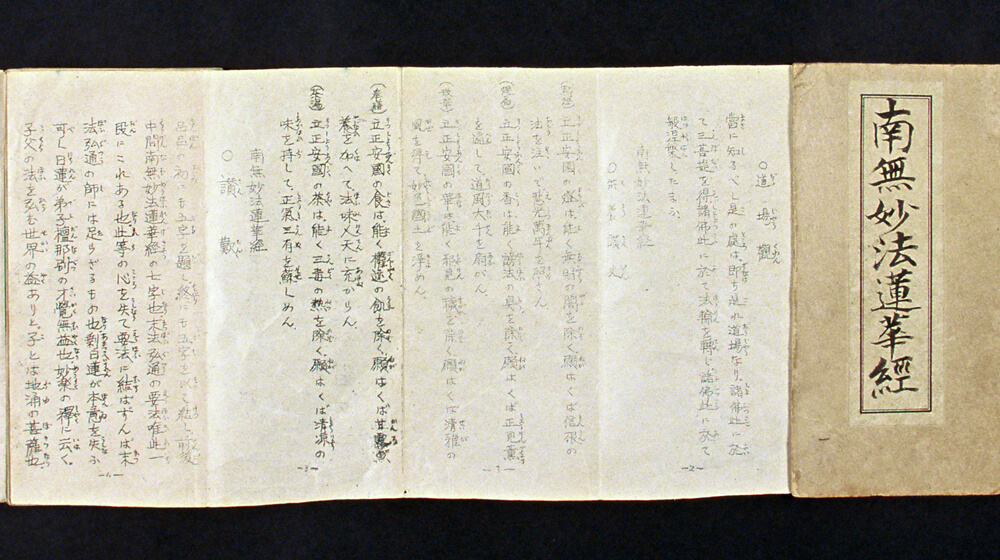
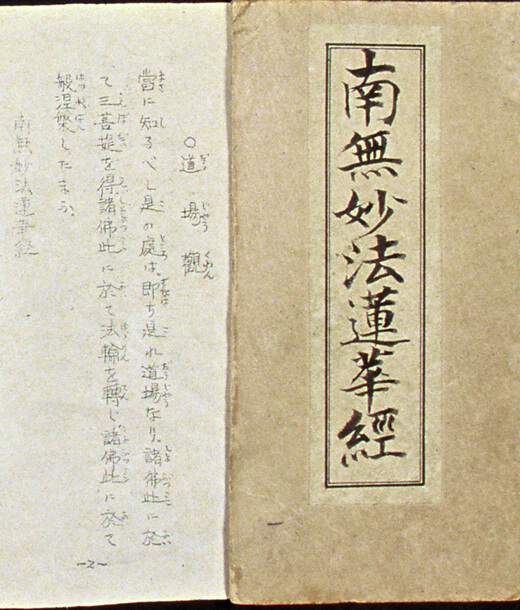
The poet Kenji Miyazawa is believed to have overcome the suffering of living and dying and to have faced death realistically through his faith in the Lotus Sutra, which expounds that the life of the Buddha is eternal. In a poem beginning with the lines “Soon I will die / Perhaps today or tomorrow,” Kenji lays bare his state of mind: “When I die, I will return to the vacuum, / I will once again perceive myself / . . . . / And this basic, original teaching has a name: the Sutra of the Lotus Flower of the Wondrous Dharma” (Miyazawa Kenji zenshu [The complete works of Kenji Miyazawa], vol. 2, Chikuma Shobo, 1986). He believed that after death, he would return to the one great life force, the universe, and eventually receive life again, as manifested in the Lotus Sutra.
Through his understanding of the Lotus Sutra, Kenji realizes that he himself is living some part of the eternal life of the universe and finds liberation from the suffering caused by his illness, and so he goes on to write: “Birth is also a Wondrous Dharma birth, / And death is also a Wondrous Dharma death.” In other words, he was able to accept both his own life (his birth), which was marked by sickness, as well as the death drawing near him, for exactly what they were: workings of the Wondrous Dharma, the Truth.
We Are All Living the Eternal Life of the Universe
Kenji Miyazawa wrote the poem quoted above, titled “February 1929,” about four years before his death, when he was thirty-three. Rarely does someone of such a young age possess such perspective on the meaning of life and death. Undoubtedly, the teachings of the Lotus Sutra provided the foundation for his insight.
No one knows where we go or what happens to us after we die. Even so, we find peace of mind in learning that the lives we are living, both now and after death, are part of the eternal life of the universe. The joy Kenji felt upon encountering the Lotus Sutra and discovering this fact is surely something that we who share the same faith can also say we experience, can’t we?
As for me, I still hold the same sentiment I expressed before. Having seen with my own eyes how Founder Nikkyo Niwano peacefully returned to the hometown of all human life, I gained the ability to calmly accept death, thinking to myself, “Hmmm, when my time comes, I hope that I will be able to die like that.” I attribute this perspective to the blessings of faith and the vast body of wisdom about human life that has been passed down by our predecessors.
That said, death makes no distinctions; it comes to everyone. There may be no such thing as a death that one can accept gladly with complete peace of mind. That is precisely why “liberation from birth, aging, illness, and death” becomes one of life’s major themes. Furthermore, because everyone must eventually face death, the greatest happiness is found in savoring the joy of being alive right now and living in the present moment in harmony with others.
As for why our present lives form part of the unbroken stream of the eternal life force that has flowed since the origin of the universe, and why we are currently living our lives while enduring the sufferings of birth, aging, illness, and death—these are questions I would like to further reflect upon.