


Light a Fire for the Sake of Other People
August 2026
When We Say “For the Sake of Others,” Who Do We Mean?
We often speak casually about the blessings of the karmic connections through which we support one another and live our lives. Sayings such as “in times of need, help each other out” and “a journey is made by companions, and the world is made by kindness” reflect sentiments that have long been accepted as a matter of course in Japan.
I mentioned Japan just now, but in the Republic of Ghana in Africa, there is also a belief deeply rooted in the minds of many people that “no matter how destitute you may become, you will never be left to die by the wayside.” In other words, someone will always be there to support or help you. Because Ghanaians mutually share this belief, they can live their lives with a cheerful, positive outlook. Of course, I believe that everywhere in the world, there are cultures and proverbs that express values and customs premised on this kind of mutual support among human beings.
In a similar vein, there is the very familiar Japanese proverb, “Your kindness is not only for the sake of others.” Obviously, this proverb means that if you show consideration for other people, your kindness will eventually find its way back to you. That is, “In this world, we all have to live together.”
To quote an easily understandable teaching of Nichiren’s that conveys the merits and significance of generosity, “When you give something to someone else, you are helping yourself, just as lighting a fire for someone else lights the path before you.” This teaching resonates with the proverb “your kindness is not only for the sake of others.” These days, however, I hear that some people harbor doubts or feel uneasy about the concept and practice of benefiting other people. A fair number of people perceive benefiting others as a form of self-sacrifice. They are reluctant to see it as a virtue and dislike devoting their time to something for the sake of other people.
In this day and age, how can we foster societies that are easy to live in, where everyone is kind to one another, and where the spirit of living together and the spirit of reciprocity—the great foundation of human life—develop effortlessly in every quarter?
Volunteers Are Bodhisattvas
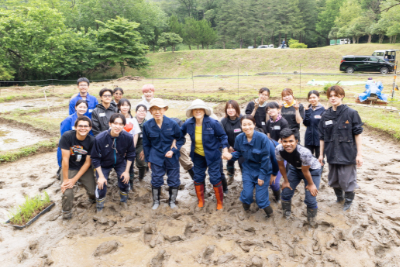
I imagine that some people will take advantage of their summer vacation to dedicate their time to other people and engage in volunteer activities.
While the term “volunteer” refers to someone who is moved by compassion and voluntarily serves those in need, the concept of service also means serving the gods and the buddhas. In years past, when I visited regions affected by disasters—including the sites of the Great Hanshin-Awaji Earthquake (which marked its thirtieth anniversary last year), the Great East Japan Earthquake, and the Kumamoto Earthquake—I was deeply inspired by the attitude of the volunteers who were working tirelessly to help the victims, just as if they were performing service to the gods and the buddhas or ministering to precious lives. From the bottom of my heart, I felt that these individuals were surely bodhisattvas. Whenever I come in contact with such volunteer bodhisattvas, their work reminds me that people possess a desire to find happiness with others, not merely by themselves.
On the other hand, some people cannot accept the idea of doing things for the sake of others, and it might actually be counterproductive to tell them that “in this world, we all have to live together.” Everyone has their own way of thinking, and I believe that trying to impose your values on others may only push them further away.
However, the Buddhist teaching of “the mutual inclusion of the ten realms” means that every mind mutually possesses every other mind in the ten realms of living beings, and therefore, we all inherently possess the mind of a buddha or a bodhisattva and can feel the desire to improve the world. If you believe this and use your physical and mental capabilities to serve others, even those people who may not believe it will be impressed by your actions. This will communicate to them the joy of selfless dedication and the truth that in this world, we all have to live together. It is important that, through just such a positive attitude, every one of us embodies and transmits a culture of being considerate of others.
Looking at the current state of affairs, though, we cannot say that everyone has an easy time living in this world. In the next issue, I would like to touch upon everyday practices that can help us live together in harmony.